
Bluestone patios on Cape Cod
Thermal and natural-cleft bluestone patios, terraces, walks and pool decks, hand-set by Blue Claw masons on a base built for Cape freeze-thaw winters.
Bluestone is the stone most Cape Cod homeowners picture when they think of a patio, and for good reason. It is dense, it holds up to salt air and freeze-thaw cycles, and it weathers to a soft blue-gray that suits shingle and clapboard. It is also unforgiving of a poor base. Most of the bluestone failures we are called to fix (rocking stones, sunken corners, ponding water) started underground, not at the surface.
Our bluestone work is done by Blue Claw masons, not subcontractors. The crew that excavates and builds the base is the crew that cuts and sets the stone, and the same foreman runs the job from layout to final sweep.
What we build in bluestone.
Patios and terraces
Back-of-house patios, multi-level terraces and dining areas, laid out around how you actually use the space.
Walks and landings
Front walks, side paths, porch landings and stepping pads, cut to fit the architecture.
Steps and treads
Full-thickness bluestone treads on stone or concrete risers, pitched so water sheds off each step.
Pool decks and coping
Bluestone decks and coping around new or existing pools, coordinated with the pool builder. See pool surrounds.
Wall caps
Bluestone caps on fieldstone, veneer and seat walls, with an overhang and drip edge.
Resetting and repair
Lifting and resetting failed bluestone on a rebuilt base, re-using sound stone where we can.
Thermal vs natural cleft, joints and base.
Thermal bluestone has a flame-finished face: flat, consistent in thickness and slightly textured. It reads clean and formal, is comfortable underfoot, and is the usual choice for pool decks, dining terraces and contemporary architecture. Natural cleft keeps the stone's split face, with more color variation and an uneven surface. It suits older homes and informal gardens, but it is less even for furniture and bare feet.
Joints. On cut thermal bluestone we hold tight, consistent joints of about an eighth of an inch, so the patio reads as one surface. Natural cleft and irregular patterns get wider joints to suit the stone. Joint material (stone dust, polymeric sand or mortar) is chosen for the base and the use.
Base and drainage. Every patio starts with excavation to firm subgrade, a compacted gravel base sized to the soil and the load, and a pitch that moves water away from the house. Where the soil drains poorly or the patio collects roof runoff, we add a dry well or perimeter drain before any stone goes down. See drainage.
Dry-laid or mortar-set. Dry-laid bluestone on a compacted base is the most common choice and the easiest to repair. Mortar-set bluestone on a concrete slab suits steps, pool coping and areas over structures. We will recommend one at the site visit and explain why.
From the portfolio.
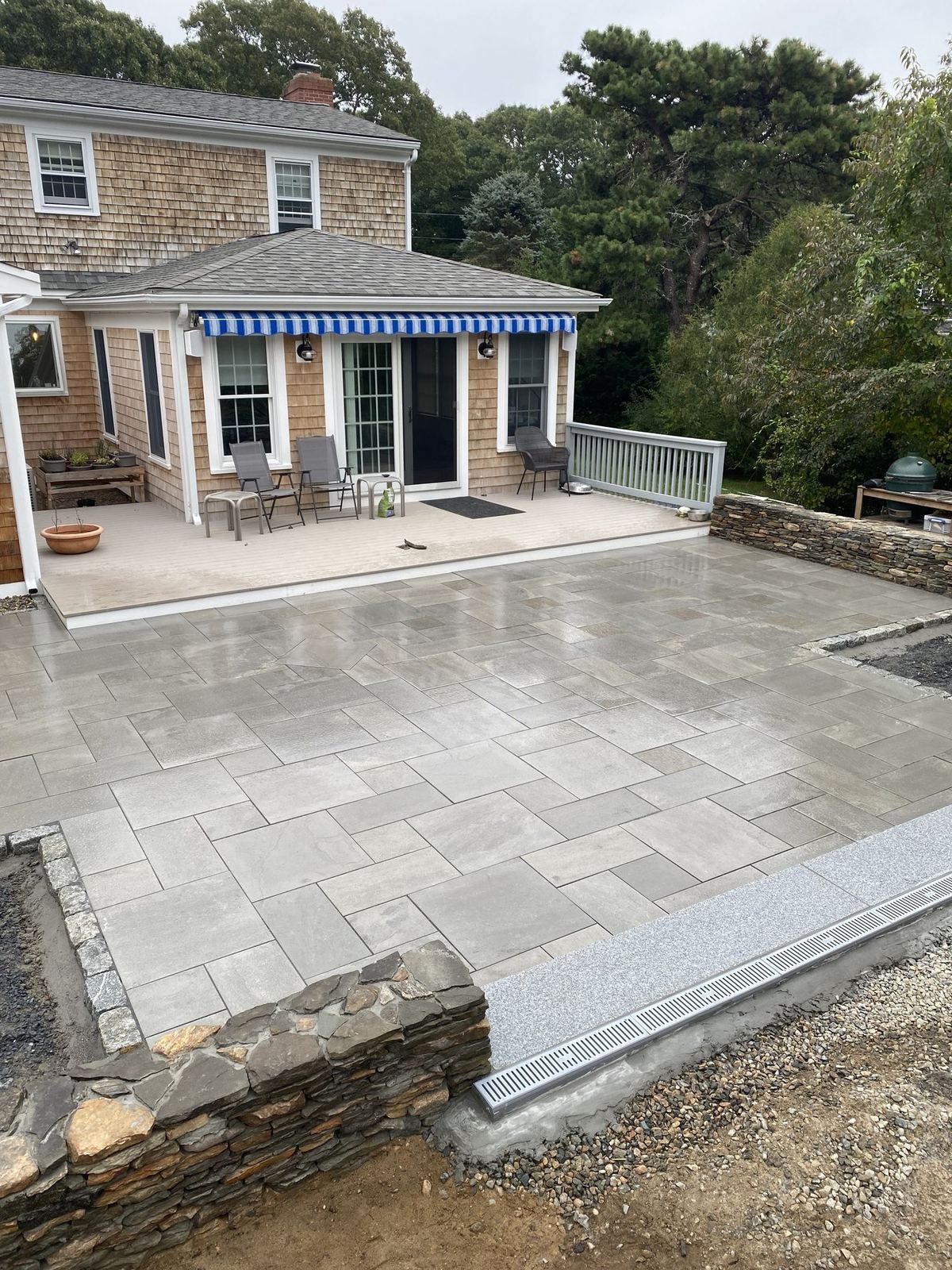
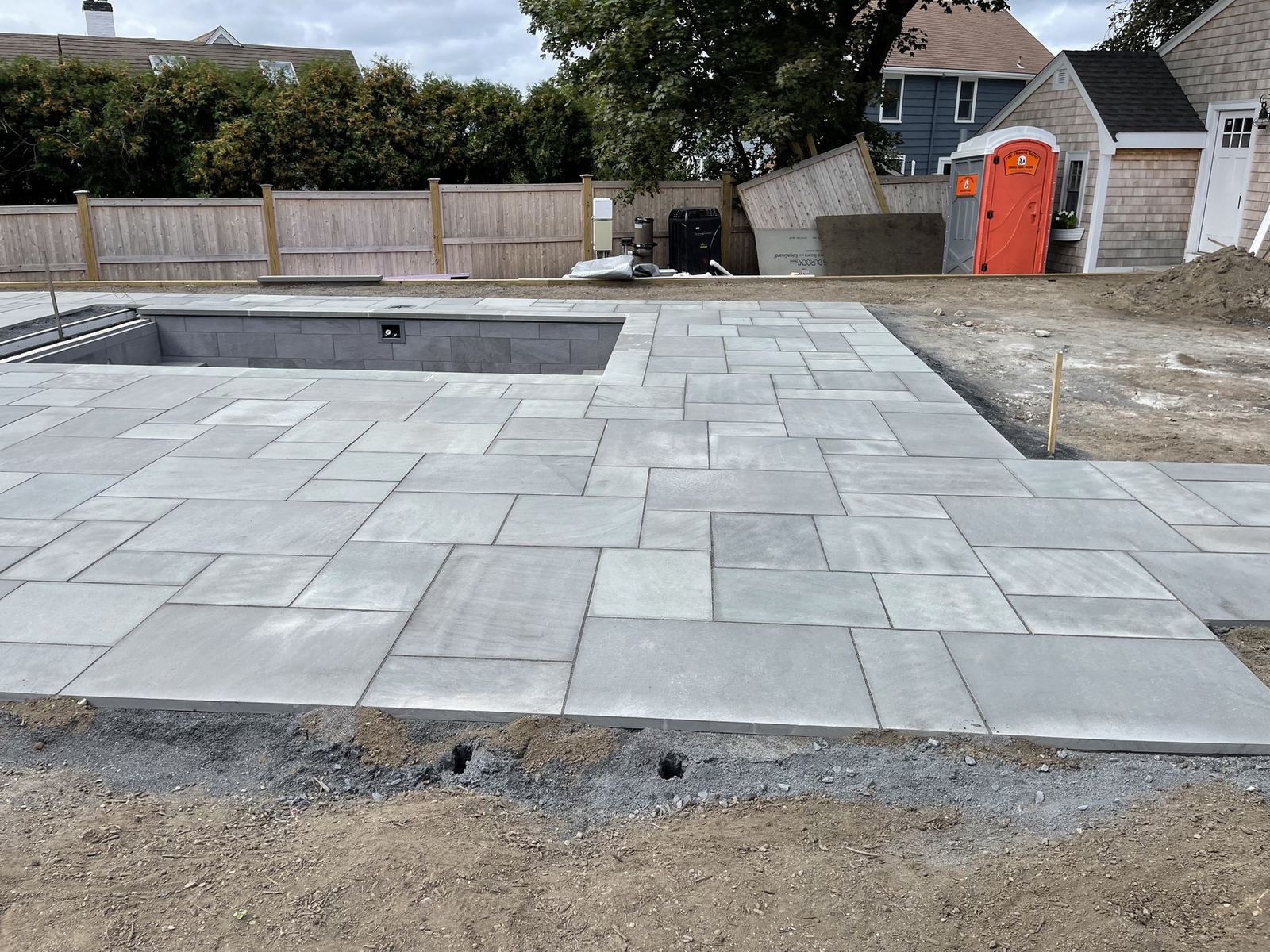
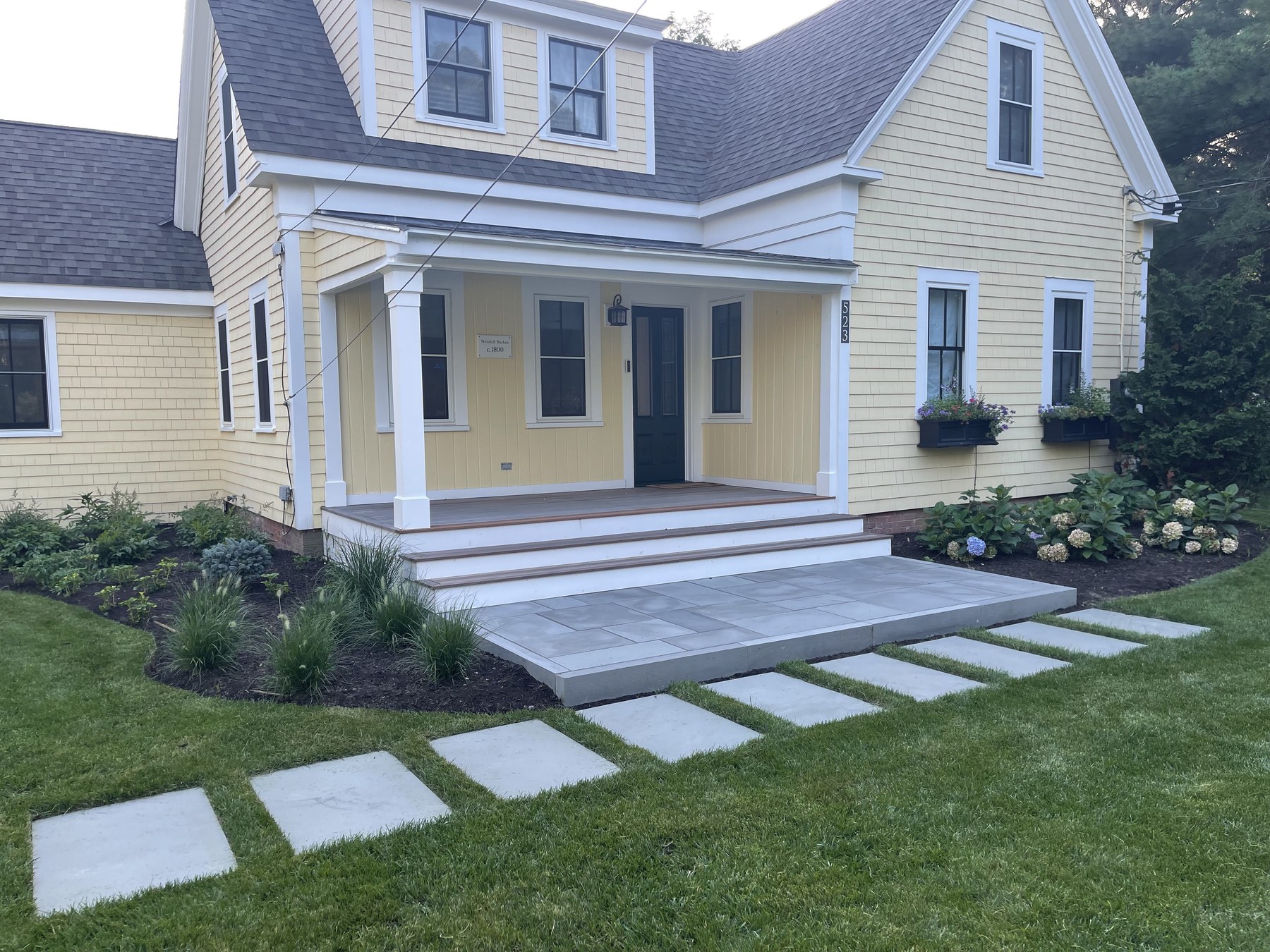
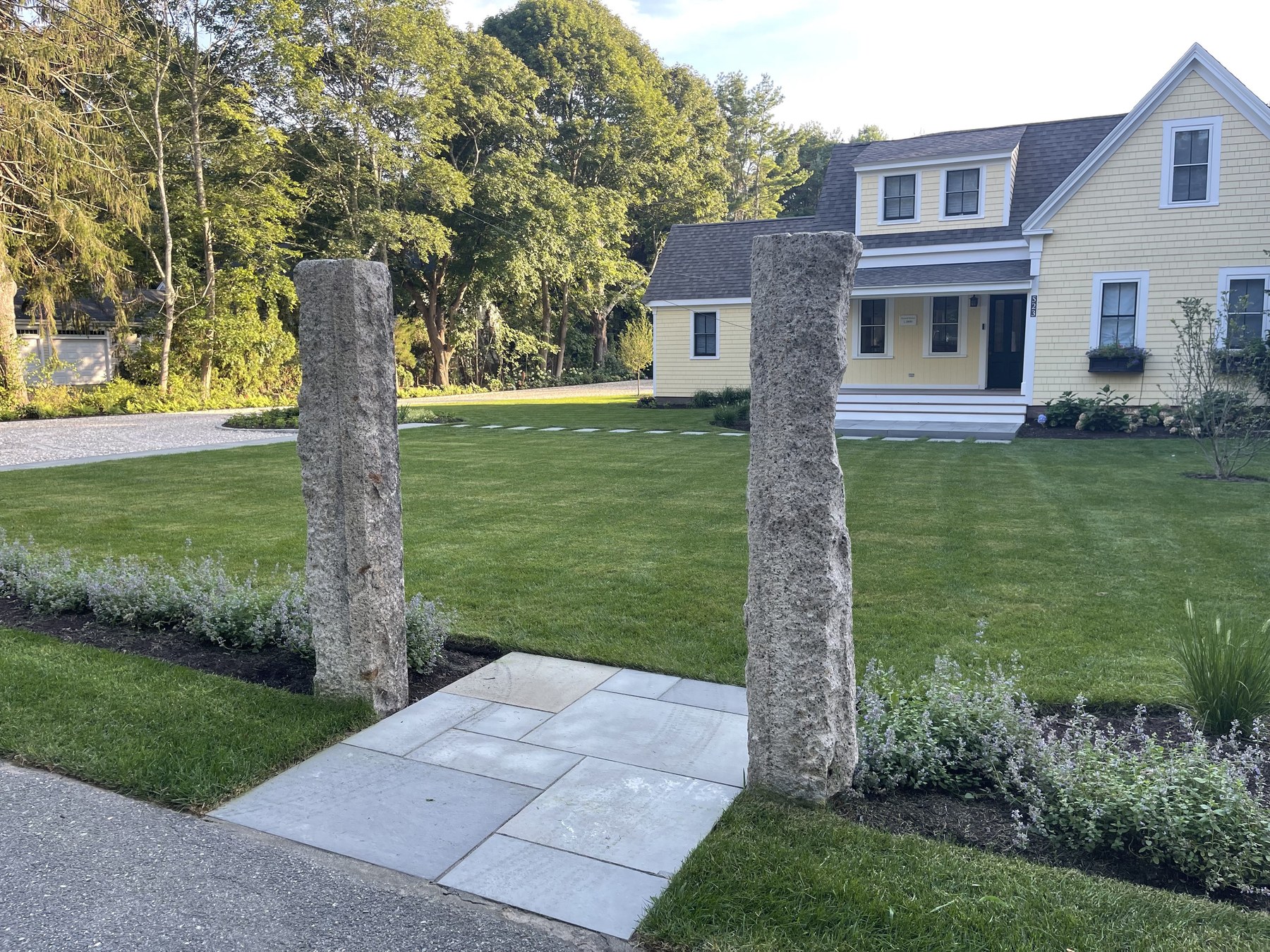
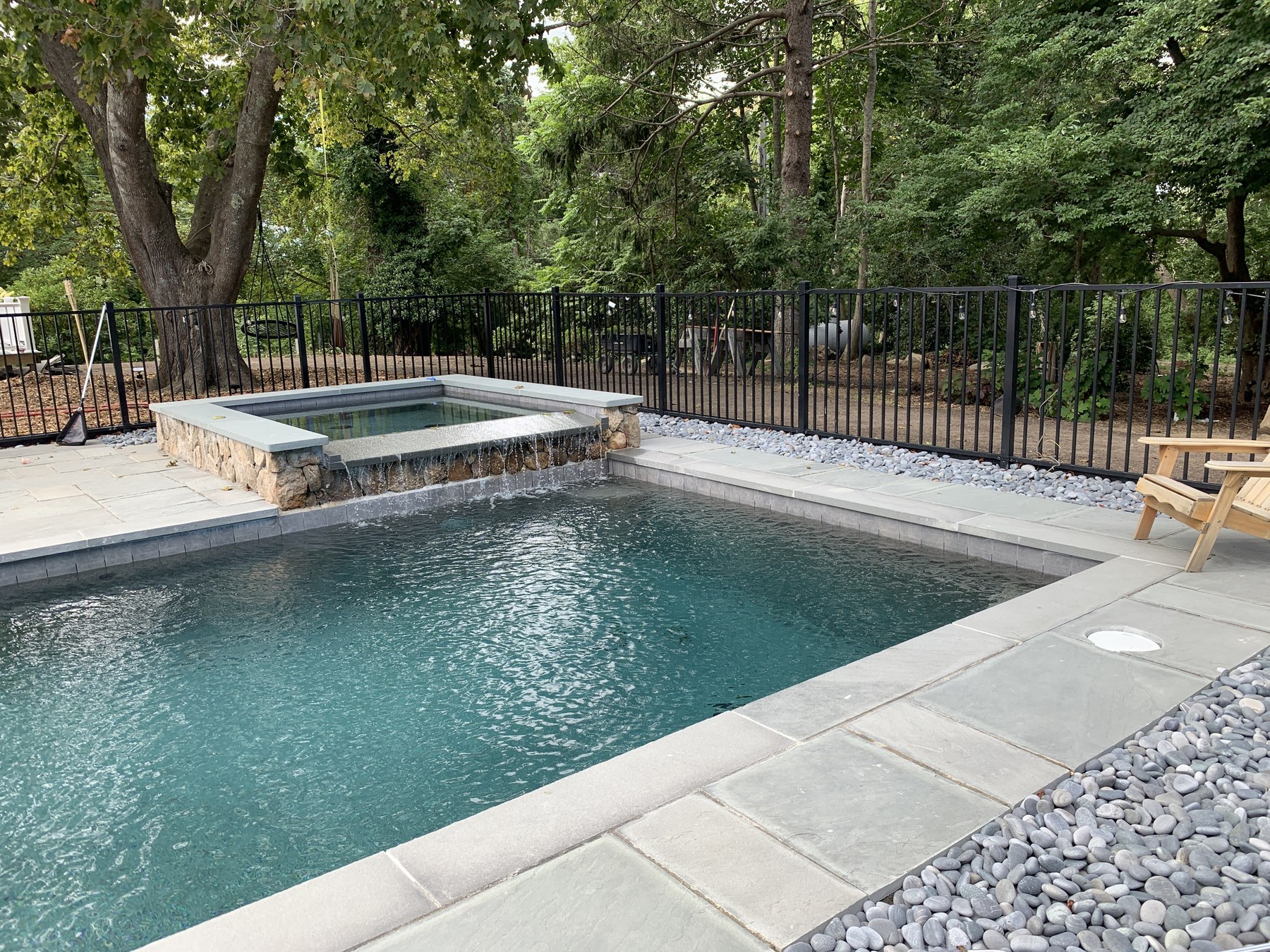
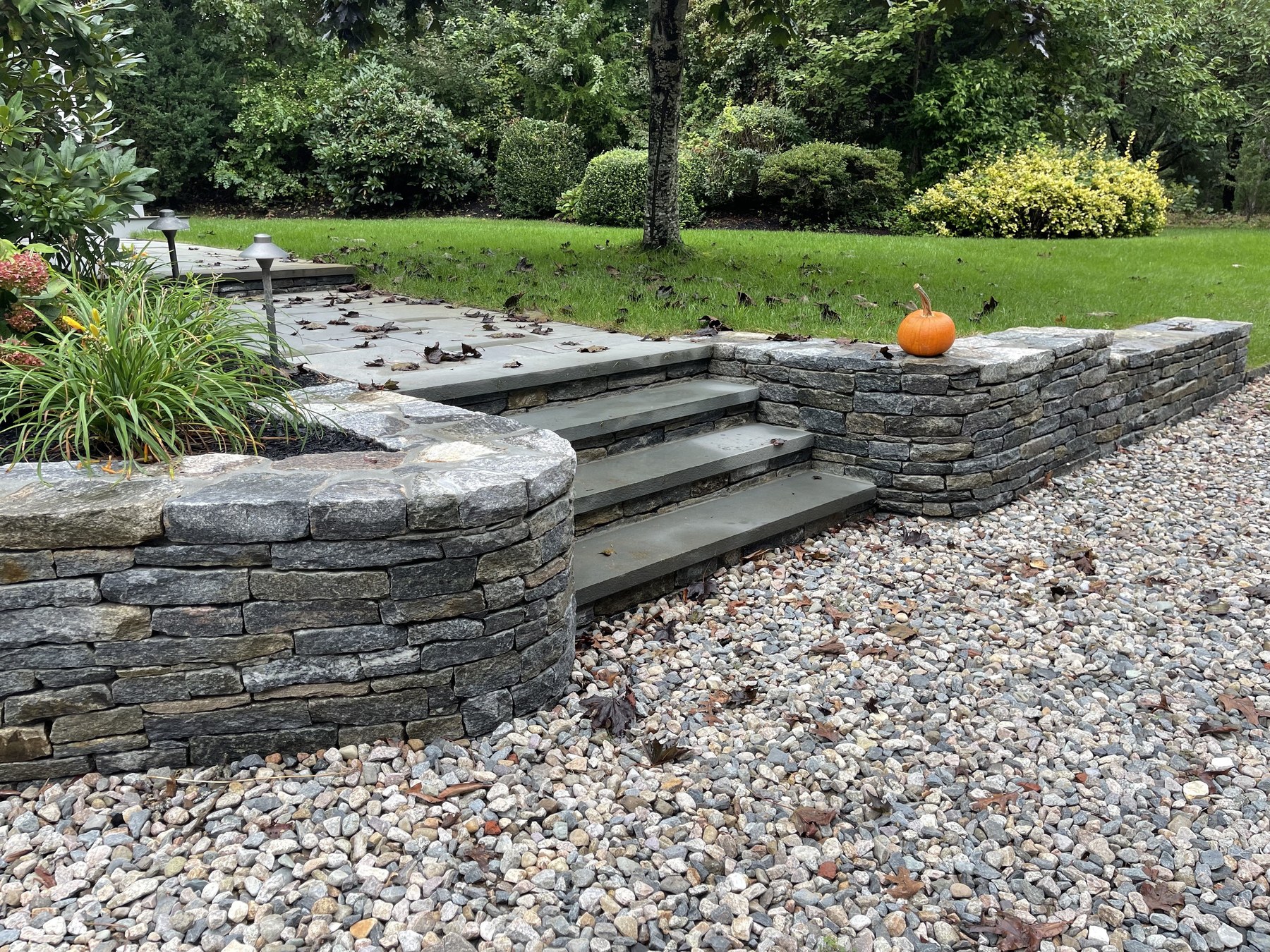
More finished projects on our portfolio page.
Where we do this work.
Chatham · Cohasset · Cotuit · Dennis · Duxbury · Eastham · Falmouth · Hanover · Harwich · Hingham · Hyannis Port · Marion · Marshfield · Mashpee · Mattapoisett · Nantucket · Orleans · Osterville · Sandwich · Scituate · Southcoast · Wellfleet
Questions we get often.
How much does a bluestone patio cost on Cape Cod?
It depends on size, thermal or natural cleft, pattern, base conditions, access and drainage. We give an itemized proposal with materials, drainage and a fixed price within 10 business days of the site visit.
Thermal or natural cleft: which is better?
Neither is better. They are different. Thermal is flatter and more uniform, which suits pool decks and dining areas. Natural cleft has more texture and color variation and suits older homes and informal gardens. We bring samples to the site visit.
Why do bluestone patios fail?
Almost always the base: too little gravel, poor compaction, or water with nowhere to go. Frost then lifts the stone unevenly. We build the base and the drainage first, which is why our patios stay flat.
Can you match bluestone to an existing patio or pool coping?
Usually, yes. Bluestone varies by quarry and finish, so we bring samples to compare against your existing stone before ordering.
Do you work from a landscape architect's drawings?
Yes. Much of our bluestone work is built to an architect's or landscape designer's drawing set. We confirm the details, source the specified stone and build to the plan.
Often built together.
Stone Masonry
Hand-set bluestone, fieldstone, cobblestone, veneer, steps and chimneys.
Explore →Retaining Walls
Fieldstone, drystack and veneer walls for sloped and coastal lots.
Explore →Pool Surrounds
Stone decks, coping and planting around the pool, coordinated with the pool builder.
Explore →Drainage
Dry wells, French drains and regrading for wet yards and patios.
Explore →Outdoor Kitchens & Fire Pits
Stone kitchens, fire pits and outdoor fireplaces.
Explore →Planning a bluestone patio?
Tell us about the property and what you have in mind. We schedule a site visit within one week and deliver an itemized proposal within 10 business days.
Let's Begin Your Service